
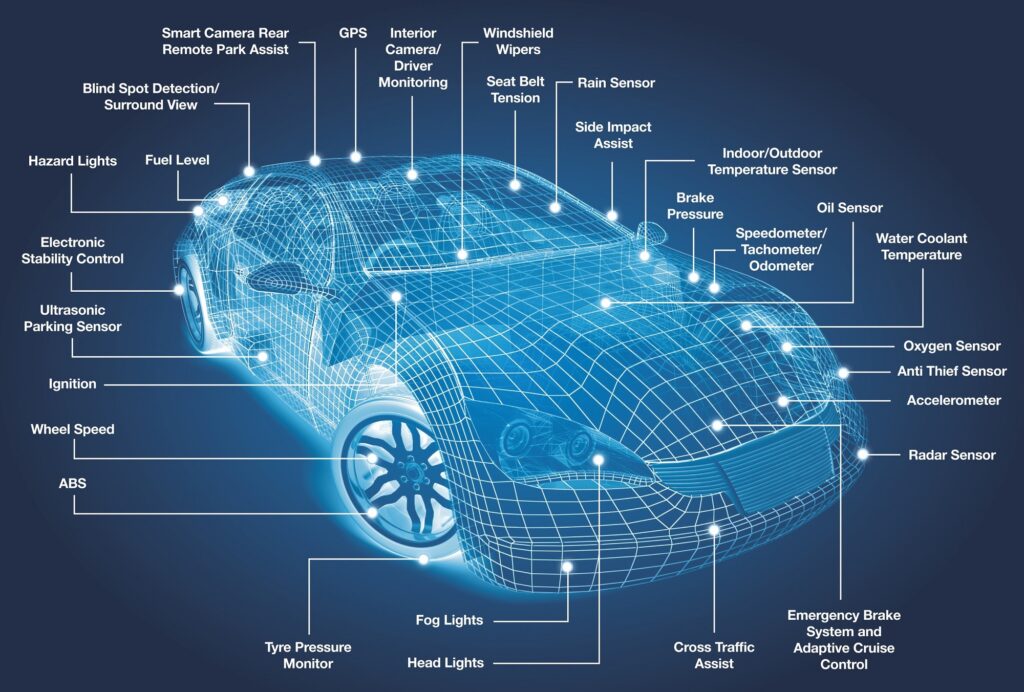
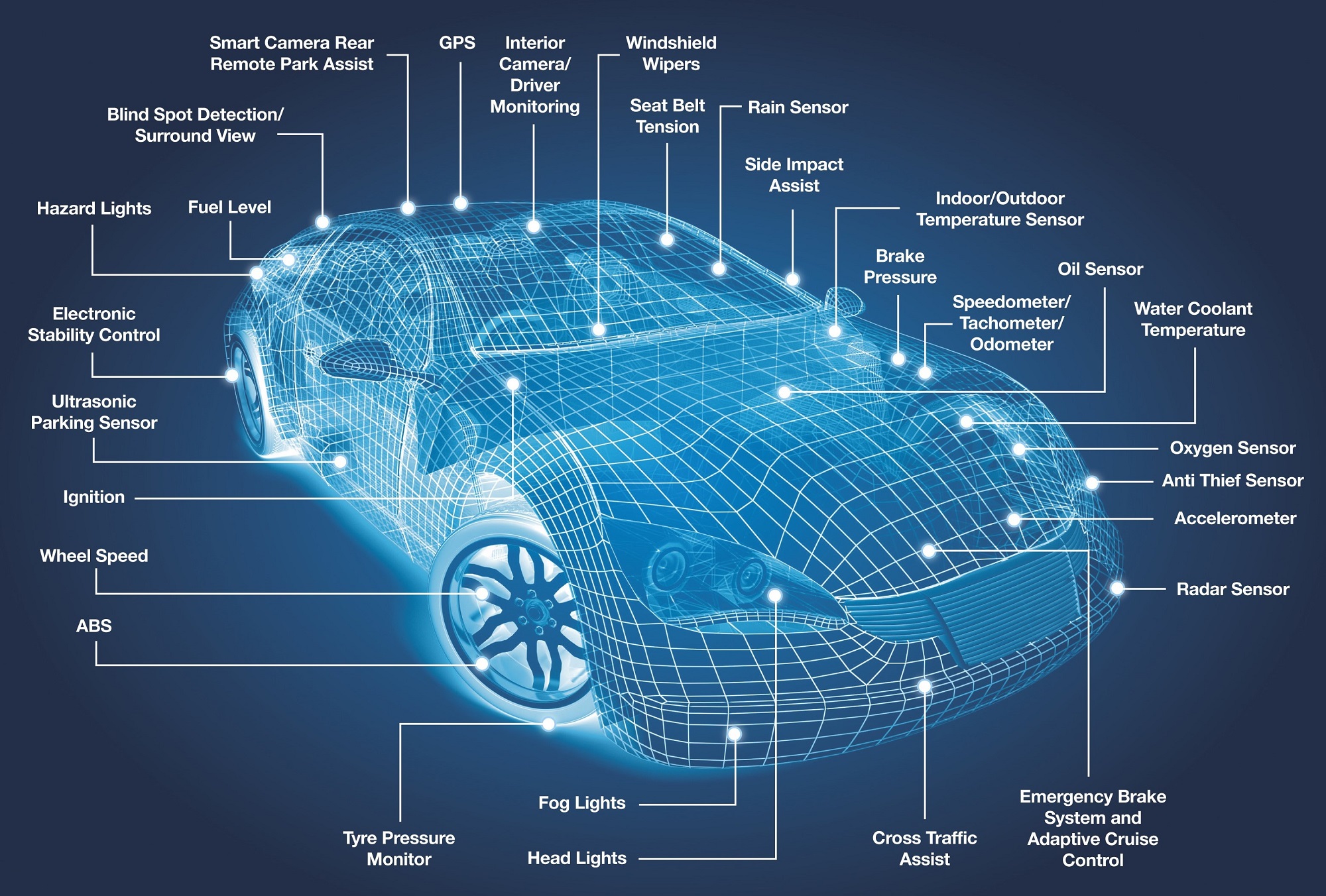
The automotive sensor market is currently experiencing unprecedented competition, with domestic and international players vying for market share. Global giants like InvenSense, Panasonic, Sensata Technologies, GE, and Robert Bosch GmbH compete with emerging Chinese manufacturers such as Novosense and Yiboda, all striving to enhance product quality and services to meet surging demand. The rapid growth of new energy vehicles (NEVs) and autonomous driving technologies has further positioned sensors as a focal point in the industry.
Looking ahead, multi-sensor fusion technology—combining cameras, radar, LiDAR, and other sensors—will dominate, delivering more comprehensive and accurate environmental perception. In-vehicle cameras will evolve toward high-definition, multifunctional, and intelligent designs, enhancing real-time recognition and advanced driver-assistance systems (ADAS). Meanwhile, millimeter-wave radar will prioritize high resolution, low cost, compact size, and energy efficiency to accelerate the adoption of autonomous driving.
I. Current Market Dynamics
1. Sustained Market Growth
Fueled by the booming smart and new energy vehicle sectors and advancements in autonomous driving, the automotive sensor market continues to expand. According to Juyi Information Consulting and the China Research and Development Institute, China’s automotive sensor market reached RMB 76.2 billion (USD 10.5 billion) in 2023, with projections of RMB 83 billion (2024), RMB 90.3 billion (2025), and RMB 98.2 billion (2026). Globally, the market is expected to hit USD 508.64 billion by 2032, driven by technological innovation and rising demand.
2. Competitive Landscape
The market remains fiercely competitive, dominated by international players like Bosch, Sensata, Infineon, NXP Semiconductors, and Denso, which leverage strong technological expertise and market presence. However, Chinese manufacturers such as Baolong Automotive, HGTECH, and Suzhou Sensors are rapidly advancing, achieving near-parity in certain technologies and securing notable market shares.
3. Technological Advancements
The integration of AI, big data, and cloud computing is accelerating the shift toward intelligent, networked sensors. Smart sensors now enable real-time vehicle monitoring and cloud-based data analytics, enhancing safety and efficiency. Multi-sensor fusion technology is revolutionizing autonomous driving by delivering precise environmental perception for decision-making and execution.
II. Market Outlook
1. NEV-Driven Opportunities
The rapid expansion of the NEV market has created vast opportunities for automotive sensors. NEVs rely heavily on electromagnetic sensors for battery, motor, and control systems, which are critical to vehicle safety, performance, and range.
2. Autonomous Driving Momentum
The rise of autonomous driving has spurred demand for environmental perception sensors, including in-vehicle cameras, ultrasonic radar, millimeter-wave radar, and LiDAR, which form the backbone of autonomous systems.
3. Policy Support
Governments worldwide are prioritizing sensor technology through policies promoting R&D and industrial adoption in automotive applications, ensuring robust growth for the sector.
III. Market Environment
1. Technological Environment
Innovations in materials, manufacturing processes, and technologies (e.g., miniaturization, low power consumption) are driving sensor performance improvements and cost reductions.
2. Demand Trends
Consumer demand for safety, comfort, and intelligence is fueling diversified and personalized sensor requirements.
3. Supply Chain Optimization
The automotive sensor supply chain spans upstream raw material suppliers to downstream automakers. Enhanced collaboration and vertical integration will boost efficiency and reduce costs.
IV. Key Trends
1. Intelligentization
Smart sensors with advanced data processing and transmission capabilities will dominate the market, enabling seamless vehicle-to-everything (V2X) communication.
2. Multi-Sensor Fusion
Sensor fusion will remain pivotal for autonomous driving, combining diverse inputs to enhance environmental awareness.
3. Localization Acceleration
Backed by government policies and technological breakthroughs, Chinese sensors are gradually replacing imports, reducing costs and boosting domestic competitiveness.
4. Expansion into Emerging Fields
Beyond automotive applications, sensors are finding roles in environmental monitoring, smart agriculture, and other sectors, driving further innovation.
Conclusion
The automotive sensor industry is poised for robust growth, supported by technological advancements, policy tailwinds, and expanding applications. As innovation continues and markets diversify, sensors will play an increasingly vital role in shaping the future of mobility and beyond.